Chronic kidney disease (CKD) often develops quietly, making early detection challenging for many individuals. For patients in Berwyn and North Chicago, Illinois, as well as Bergen, New Jersey, understanding why early symptoms are frequently overlooked can help support earlier awareness and long-term kidney health. Nephrology Associates of Northern Illinois and Indiana (NANI) provides education across these communities, supported by experienced providers such as Samuel Agahiu MD, Emmanuelle Gilles MD, Louis Jan MD, and Marc Zelkowitz MD in Bergen; Matthew Anderson MD, Rajiv Gandhi MD, Andrew Kowalski, MPH, FASN MD, and Joanne Wheaton APRN, FNP-C in Berwyn; and Ernest Cabrera MD, John Travis Ludwig MD, Khaleel Sayeed MD, and Ashwin Shetty MD in North Chicago.
CKD affects millions of people, yet many are unaware they have it until the disease has progressed. This lack of awareness is not due to neglect, but rather to the subtle and nonspecific nature of early symptoms. Learning how CKD presents in its earliest stages empowers individuals to recognize changes sooner and seek evaluation before significant kidney damage occurs.
Why Early CKD Rarely Causes Obvious Symptoms
In the early stages of CKD, the kidneys are often still able to compensate for mild damage. Filtration capacity may decline gradually, but remaining healthy kidney tissue works harder to maintain balance. Because of this compensation, waste products may not build up to levels that cause noticeable discomfort.
Early CKD symptoms also tend to be vague and easily attributed to everyday life. Mild fatigue, changes in concentration, or occasional swelling may be dismissed as stress, aging, or lack of sleep. These symptoms rarely feel severe enough to prompt immediate concern, which contributes to delayed detection.
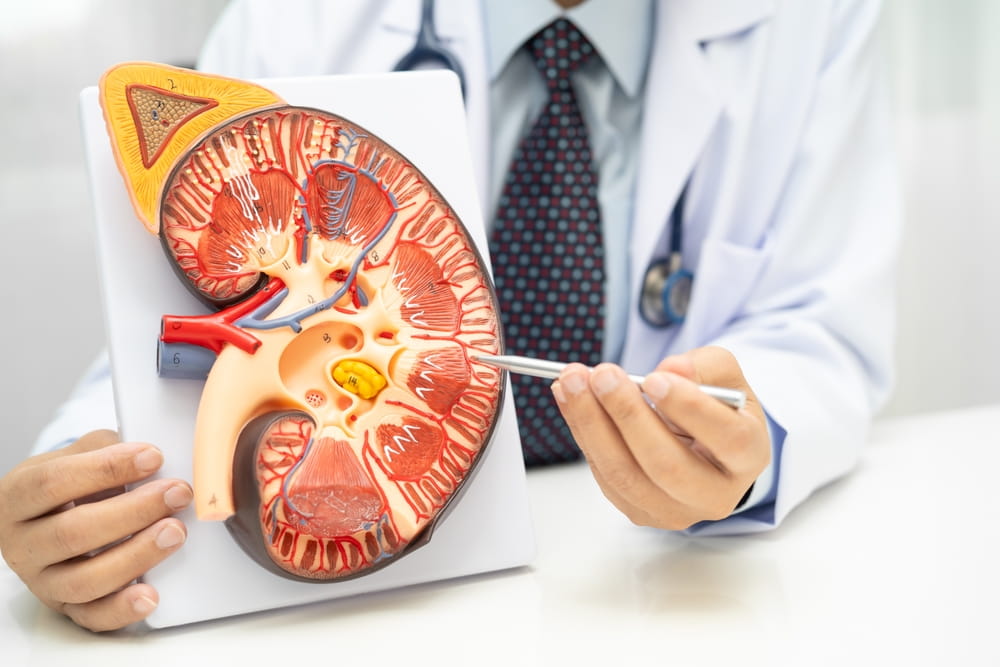
Understanding how kidney disease develops can help clarify why these early changes matter. Educational resources, such as kidney disease information, explain how CKD progresses and why early stages often go undetected without screening.
Subtle Physical Changes Many People Overlook
Some of the earliest physical signs of CKD are subtle and inconsistent. Fatigue is one of the most common early symptoms. This fatigue often feels different from normal tiredness and may persist despite adequate rest. Reduced kidney function can lead to mild anemia or toxin buildup, both of which contribute to lower energy levels.
Changes in urination are another early indicator that may be overlooked. Individuals may notice increased frequency at night, darker urine, or urine that appears foamy due to protein leakage. These changes often fluctuate and may not seem concerning on their own, but over time they can signal early kidney involvement.
Swelling in the ankles, feet, or around the eyes may also appear intermittently. Early fluid retention is often mild and may come and go, making it easy to ignore. However, even subtle swelling reflects changes in how the kidneys manage fluid balance.
Learning how kidney filtration works can help individuals connect these symptoms to kidney health. Kidney function education provides insight into how early changes in filtration affect the body.
How Risk Factors Mask Early CKD Symptoms
Many people at higher risk for CKD already live with conditions that cause similar symptoms. Diabetes, high blood pressure, heart disease, and aging itself can all lead to fatigue, swelling, or changes in urination. Because these symptoms overlap, early CKD signs are often attributed to existing conditions rather than kidney involvement.
Medications can further mask symptoms. Diuretics may reduce swelling, and blood pressure medications may stabilize readings even as kidney function changes. While these treatments are important, they can make it harder to recognize early kidney decline without lab testing.
This overlap highlights why routine screening is especially important for high-risk individuals. Blood and urine tests can identify early changes that symptoms alone cannot reveal.
The Role of Screening in Early Detection
Because early CKD symptoms are subtle, screening becomes one of the most effective tools for early detection. Tests such as estimated glomerular filtration rate (eGFR) and urine albumin measurements provide objective insight into kidney function and stress long before symptoms become obvious.
Regular screening allows individuals and providers to track trends over time rather than reacting to advanced disease. Early identification supports lifestyle adjustments, medication review, and closer monitoring that may slow disease progression.
For individuals seeking to understand how daily habits influence kidney health, kidney protection resources offer practical strategies that support long-term kidney stability.
Why Awareness Changes Long-Term Outcomes
Recognizing that early CKD symptoms are often overlooked helps shift the focus from symptom-based care to proactive monitoring. When individuals understand that feeling “mostly fine” does not always mean the kidneys are healthy, they are more likely to value routine testing and follow-up.
Early awareness provides time to adjust nutrition, manage blood pressure and blood sugar more carefully, review medications, and establish consistent monitoring. These steps are most effective when taken before kidney damage becomes advanced.
For patients in Berwyn, North Chicago, and Bergen, Nephrology Associates of Northern Illinois and Indiana (NANI) continues to support kidney health through education that emphasizes early recognition and prevention. By understanding why early CKD symptoms often go unnoticed, individuals can take a more active role in protecting their kidney health and improving long-term outcomes.
Sources
Levey AS, Coresh J (2012). Chronic kidney disease. The Lancet.
Eckardt KU, Coresh J et al. (2013). Evolving importance of kidney disease. Kidney International.
Jha V, Garcia-Garcia G et al. (2013). Chronic kidney disease: global dimension and perspectives. The Lancet.