
Nephrology Today
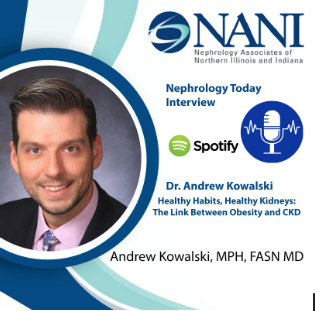
: Nephrology Today Healthy Habits, Healthy Kidneys: The Link Between Obesity and CKD
If you or someone you love is living with chronic kidney disease (CKD), this conversation is a must-hear. Dr. Andrew Kowalski unpacks how obesity accelerates kidney damage—and what practical, doable steps actually move the needle.
Obesity isn’t a willpower problem—it’s a complex disease state that changes physiology, drives inflammation, and forces the kidneys to overwork. That means real, evidence-based strategies (not shame or stigma) are essential. Dr. Kowalski breaks it down simply: start where you are, build habits slowly, and combine lifestyle with the right medical tools when needed.
What We Discuss:
- Why obesity is a disease: how fat tissue acts like an organ—secreting hormones and inflammatory signals that stress the kidneys.
- CKD progression & obesity: increased blood volume, glomerular overwork (“revving the engine”), oxidative stress, and lipotoxicity inside renal cells.
- Beyond BMI: the limits of BMI and why waist circumference and weight-to-height ratio better predict kidney and heart risk.
- Transplant access & stigma: rethinking weight cut-offs and advocating for fair, patient-centered decisions.
Lifestyle that works:
Eating “clean” starts with shopping the periphery of the grocery store—produce, lean proteins, dairy—while minimizing ultra-processed, boxed, and shelf-stable foods that drive inflammation and cravings. Keep a protein sanity check in mind, especially with CKD: aim for appropriate intake and always confirm your target with your nephrologist. Pair that with the DASH diet’s simple swaps (think: more fruits/veggies, whole grains, low-fat dairy, fewer salty sides), which can lower blood pressure by ~5–7 points—roughly the impact of a medication. For movement, walking is the highest-ROI habit: start with a few minutes, add a block, then another; use resistance bands to spare your joints while building strength. When needed, medications like SGLT2s (Jardiance, Farxiga) and GLP-1s (Ozempic, Wegovy, Mounjaro) can support—not replace—lifestyle changes. Real results come from structured, incremental steps: one patient-focused plan, steady tweaks, and sustained wins in weight and health. The mindset is simple: find your biggest hurdle (food or movement), tackle just one thing, and turn it into a habit—because consistent progress beats perfection.
Dr. Andrew Kowalski is a nephrologist with NANI whose clinical interests bridge interventional nephrology and patient education. In addition to his procedural expertise, he’s known as a healthy-eating and lifestyle mentor for patients with kidney disease. Dr. Kowalski translates complex physiology into everyday choices—clarifying what “diet and exercise” really mean, demystifying the DASH diet, and tailoring habit-building plans that patients can actually follow. His approach: reduce stigma, treat obesity as a true medical condition, and pair compassionate coaching with the best available therapies so patients can protect kidney function and quality of life.
Listen on Spotify: Search “Nephrology Today” to hear this episode and more actionable conversations for people living with kidney disease.🎧 Listen now on Spotify
Takeaway to act on today: Put on your walking shoes and take a short, easy walk. Tiny steps compound—your kidneys will thank you. https://youtu.be/jDQMMqc5HTo