
Kidney stones are a common and often painful condition affecting people of all ages. For individuals in Berwyn and North Chicago, Illinois, as well as Bergen, New Jersey, understanding how kidney stones develop—and how they can be prevented—supports long-term kidney health. Nephrology Associates of Northern Illinois and Indiana (NANI) helps guide individuals through kidney stone education and prevention, with dedicated providers including Samuel Agahiu MD, Emmanuelle Gilles MD, Louis Jan MD, and Marc Zelkowitz MD in Bergen; Matthew Anderson MD, Rajiv Gandhi MD, Andrew Kowalski, MPH, FASN MD, and Joanne Wheaton APRN, FNP-C in Berwyn; and Ernest Cabrera MD, John Travis Ludwig MD, Khaleel Sayeed MD, and Ashwin Shetty MD in North Chicago.
Kidney stones form when minerals and salts in the urine become concentrated enough to crystallize. Over time, these crystals can grow into stones that may remain in the kidneys or move through the urinary tract. Symptoms often develop once stones begin to move, causing discomfort or blockage. Understanding the causes, symptoms, and prevention strategies allows individuals to reduce their risk and protect long-term kidney function.
Individuals seeking foundational information about kidney disease and related conditions can explore kidney disease education to better understand how lifestyle factors, hydration, and underlying health influence kidney stone formation.
What Causes Kidney Stones to Form?
Several factors contribute to kidney stone development. Dehydration is one of the most common causes because it results in concentrated urine, increasing the likelihood that minerals will crystallize. Individuals who drink insufficient water throughout the day—especially those in hot climates or with active lifestyles—may be more prone to forming stones.
Dietary choices also influence stone formation. High salt intake can increase calcium levels in the urine, while diets high in oxalate-rich foods—such as spinach, nuts, and chocolate—may contribute to calcium oxalate stones. Excessive animal protein intake may increase uric acid levels, raising the risk of uric acid stones.
Genetics, family history, digestive conditions, and certain medications can also play roles. People who have experienced kidney stones once are more likely to develop them again, making prevention an essential long-term priority.
Understanding kidney function provides helpful context for how stones form. Individuals can learn more about filtration and mineral balance through kidney function resources.
Common Symptoms of Kidney Stones
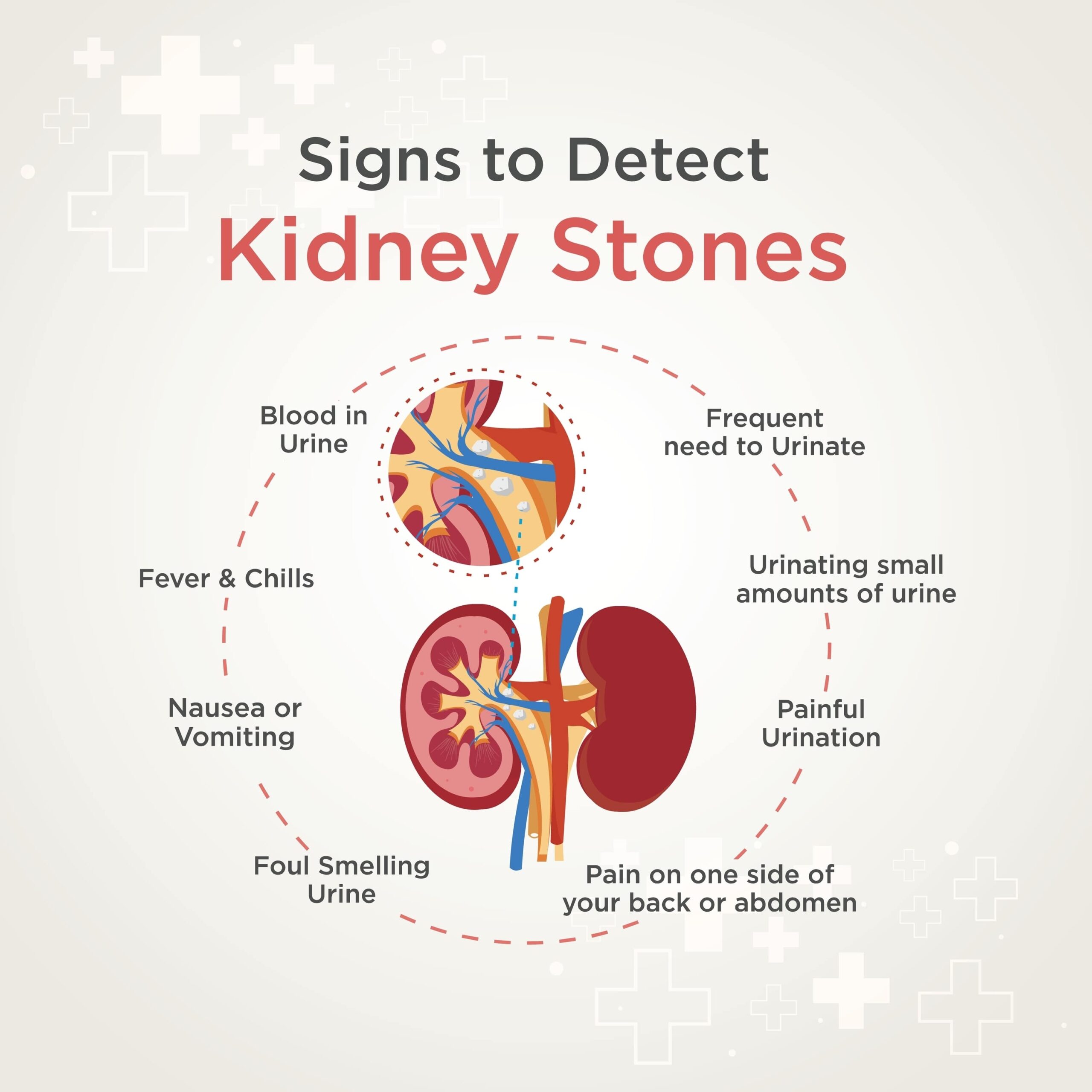
Not all kidney stones cause symptoms. Small stones may pass without discomfort, but larger stones can create noticeable changes. Some of the most common symptoms include sharp pain in the side or lower back, radiating pain into the abdomen or groin, and discomfort that comes in waves. Many individuals describe the pain as severe and unlike any other type of discomfort.
Additional symptoms may include:
• Blood in the urine
• Difficulty urinating or frequent urges
• Cloudy or foul-smelling urine
• Nausea or vomiting
• Fever or chills when infection is present
Because these symptoms can mimic other conditions—such as urinary tract infections—it is essential to seek evaluation when they appear. Early attention helps determine whether a stone is present and whether treatment is needed.
How Kidney Stones Are Diagnosed
When symptoms suggest kidney stones, imaging tests such as CT scans or ultrasounds help identify the size, type, and location of the stone. Blood and urine tests provide further insight into mineral balance, kidney function, and infection risk.
Understanding the type of stone—such as calcium oxalate, uric acid, or struvite—allows individuals and providers to develop targeted prevention strategies. For example, calcium oxalate stones may require reducing oxalate intake, while uric acid stones may improve with changes that stabilize pH.
Diagnosis also provides insight into whether kidney function has been affected. Stones that block urine flow can lead to swelling in the kidney, known as hydronephrosis, or increase the risk of infection. Timely evaluation reduces the risk of complications and helps determine the most appropriate next steps.
Prevention Strategies for Kidney Stones
Long-term prevention focuses on reducing the conditions that allow stones to form. Hydration is one of the most effective strategies. Drinking enough water to keep urine light in color helps dilute minerals, reducing the likelihood of crystallization. Individuals who exercise frequently or live in warm climates may require additional fluid throughout the day.
Dietary changes also support prevention. Reducing sodium helps lower the amount of calcium in the urine, while moderating animal protein intake supports better metabolic balance. Increasing fruits and vegetables that provide natural citrate can help prevent calcium-based stones from forming.
Individuals who want to explore these strategies further may review kidney protection guidance for additional insights into supportive habits.
For individuals with recurrent stones or those with medical conditions such as gout or inflammatory bowel disease, providers may recommend tailored dietary adjustments or medications to stabilize mineral levels and prevent new stones.
Treatment Options When Kidney Stones Occur
When stones are small, many pass naturally with hydration and time. However, larger stones may require medical intervention. Options may include pain management, medications that relax the urinary tract, or procedures such as shock wave lithotripsy, ureteroscopy, or percutaneous nephrolithotomy. The appropriate treatment depends on the size, location, and type of stone.
Timely care helps protect kidney function and prevent complications such as infection or obstruction. Understanding the available treatment options allows individuals to feel prepared should a stone develop.
Supporting Kidney Wellness Through Knowledge and Prevention
Kidney stones are common, but they are also preventable in many cases. By understanding what causes them, recognizing early symptoms, and making intentional dietary and hydration choices, individuals can significantly reduce their risk. Early awareness empowers individuals across Berwyn, North Chicago, and Bergen to take active steps to protect their kidneys and prevent discomfort in the future.
Nephrology Associates of Northern Illinois and Indiana (NANI) continues to support individuals through education, early evaluation, and preventive strategies that promote long-term kidney wellness.
Sources
Scales CD, Smith AC (2012). Epidemiology and pathogenesis of kidney stones. Clinical Review in Urology.
Curhan GC (2007). Nutrition and kidney stone prevention. New England Journal of Medicine.
Pearle MS, Goldfarb DS (2014). Medical management of kidney stones. American Urological Association.